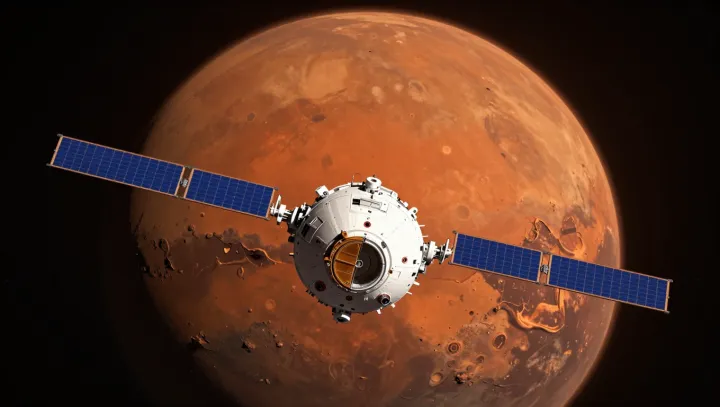
Mars can hoard ice without keeping a puddle. The distinction matters. Across most of the planet, atmospheric pressure is so low that exposed liquid water can boil away or freeze quickly, even where sunlight briefly warms the ground. Ice, meanwhile, survives in polar caps and beneath the surface.
The atmosphere is the decisive constraint. At the triple point of water, ice, liquid and vapor can coexist; below that pressure, pure liquid water is not stable. Much of Mars sits near or below that threshold, with pressure varying by elevation and weather. Cold compounds the problem. When ice is exposed, sublimation can send it directly into vapor without producing a lasting pool. Salts can lower water's freezing point, so transient brines may be possible under some conditions, but their presence at the surface remains uncertain.
The dry surface is not the whole story. Spacecraft have mapped immense volcanoes, including Olympus Mons, and ancient valleys whose shapes point to flowing water in the distant past. Minerals identified from orbit and by rovers add evidence that water once interacted with rock, although the duration and extent of wet conditions remain contested. Mars may once have had a thicker atmosphere, which would have helped liquid water persist. Today, its thin air leaves an austere puzzle: a world rich in frozen water, where an open pool would struggle to hold its shape.