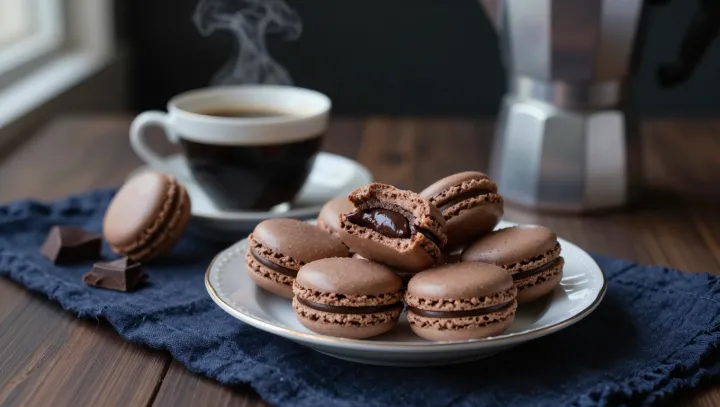
Cocoa makes macarons less forgiving, even when the recipe looks almost identical to its plain counterpart. A modest addition changes how the batter holds moisture and flows, and those shifts can turn a smooth shell into a cracked or misshapen one. Chocolate is not merely a flavor here.
The trouble begins with balance. Cocoa powder contains fine particles that absorb moisture, so adding it without adjusting the other dry ingredients can leave the batter thicker than intended. During macaronage, the folding stage that incorporates almond flour and sugar into meringue, a thick batter may resist spreading into even rounds. The result can be shells with peaks or uneven surfaces. Cocoa also contains fat, and excess fat can interfere with the protein network that stabilizes meringue, particularly if it enters before the egg whites have formed a stable foam. Mixing matters as much as measurement.
Precision beats improvisation. Rather than simply adding cocoa to a reliable plain recipe, a baker is better served by a formula developed for chocolate shells, with its dry ingredients proportioned accordingly. Sifting helps distribute the cocoa, while careful folding gives the batter a chance to flow without stripping too much air from it. Baking conditions still matter: an oven that runs too hot can crack shells before their interiors have set, and cooling affects how readily they release from the baking surface. Between two almond meringue shells, a rich filling promises abundance; the thin crust that contains it depends on restraint.