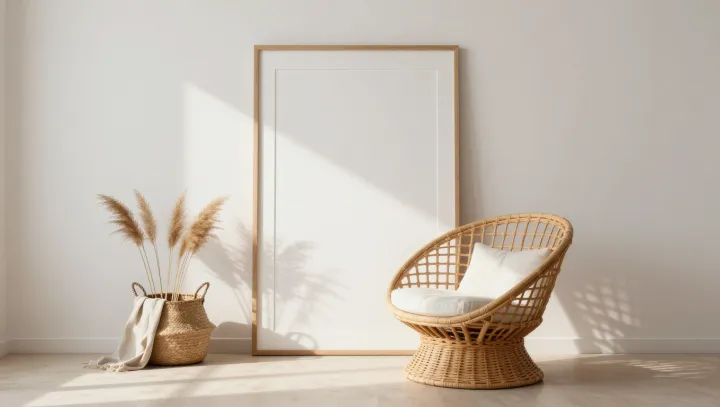
The woven chair does more for warmth than another coat of paint could. Its strands catch sunlight unevenly, drawing fine shadows across a quiet surface while dried grasses add a loose, feathery outline nearby. Nothing needs a brighter color. The room feels more inviting because its pale materials give the eye more to notice.
Texture is the difference between calm and blank. A smooth wall reflects light across a broad area; a woven seat breaks that light into highlights and shadows, making its surface appear more varied. Designers call this interplay visual texture, and it can make a restrained palette feel layered rather than spare. Dried stems contribute a contrasting shape: slender and irregular beside the chair's tighter weave. The effect is visual, not thermal. Neither material needs to raise the room's temperature to suggest the comfort often associated with natural fibers.
Restraint makes those details matter. Set too many textured objects together and their individual patterns can compete; leave some smooth surfaces visible and the woven chair has room to register. The same principle applies to light: direct sun sharpens the pattern of a weave, while softer daylight gives it a quieter presence. Placement matters more than quantity. A chair near a window and a few dried stems can lend depth to a neutral corner without a new palette, a major purchase or an elaborate scheme. By late light, even the smallest shadow has found a place to sit.