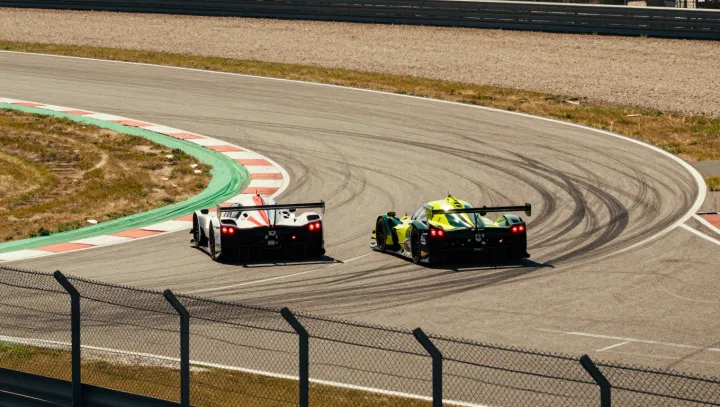
The slipstream is a bargain with a hidden cost. On a straight, a GT car tucked behind another encounters less aerodynamic drag and can gain speed. At the next corner, that same proximity may rob it of grip, turning an apparent advantage into a difficult choice between staying close and staying under control.
The trouble begins in the wake. A leading car leaves behind turbulent, disturbed air, and the following car's wings and bodywork may produce less downforce when that air reaches them. Less downforce means less load pressing the tires onto the track, reducing the cornering force they can generate. The effect varies with the cars, their separation and the corner, but it can leave the following driver with understeer, oversteer or a less predictable balance. Tires pay a price. Sliding can increase their temperature and wear, making sustained pressure harder to maintain.
An overtaking attempt is therefore a trade, not a simple pursuit of speed. A driver may drop back before a fast corner to regain cleaner airflow, then use a stronger exit to close the gap on the straight. Braking later or choosing a different line can also create an opening, though each choice carries its own risk and depends on available grip. There is no free draft. The closer the two cars run, the more the leader's wake can dictate the follower's options: a contest in which the space between them is as consequential as the machinery itself.