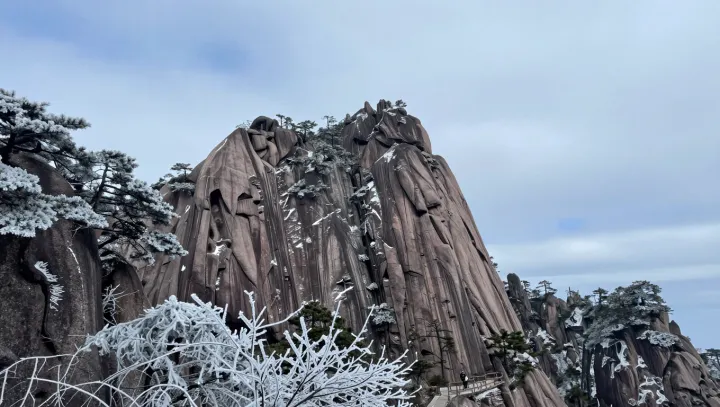
A pine clinging to granite makes a cliff look less barren than it is. Snow weighs on its needles; beneath them, roots disappear into fissures where fragments of rock and organic matter collect. The tree has little room to spare, yet its grip turns an apparently bare wall into a place to live.
The secret is not a root that drills through solid stone, but an ability to exploit openings already there. Roots grow into cracks, anchoring the tree and reaching pockets that hold water and nutrients. Weathering gradually breaks rock down, while fallen needles and other organic debris contribute to the thin soil. Mycorrhizae, associations between roots and fungi, can help pines acquire nutrients from poor soils. Growth comes at a price. With limited water and space, cliff trees may grow slowly and take on the twisted forms for which mountain pines are admired.
Snow makes the scene beautiful, but it also exposes the tree to a demanding bargain. Evergreen needles limit water loss through their small surface area and waxy coating, an advantage when frozen ground restricts water uptake. Branches must also withstand wind and the weight of snow, though severe conditions can break them. Seen against a pale cliff, the pine seems almost to defy the stone. In fact, its hold depends on the stone's smallest imperfections.