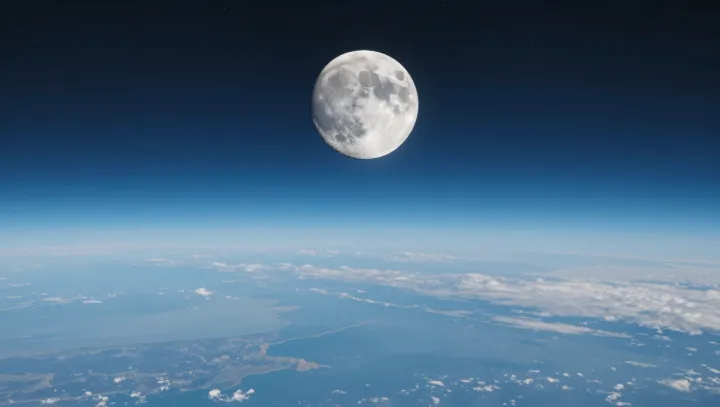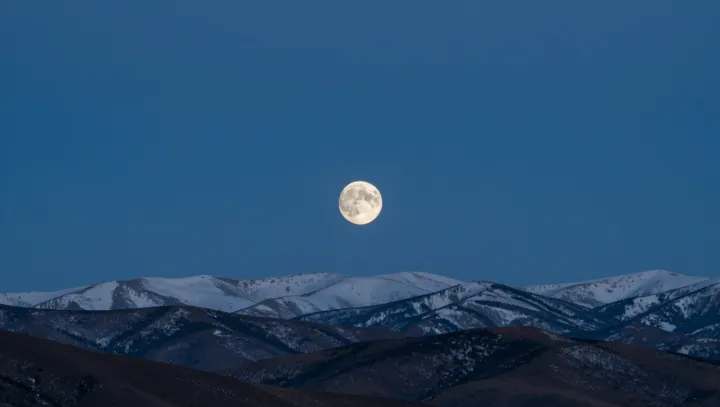
The full Moon is brighter than its surface deserves. Above snow-covered mountains, its dark plains and pale highlands form a brilliant disk, yet the lunar soil reflects only a modest share of the sunlight striking it. The apparent contradiction is less about the Moon than about the conditions in which it is seen.
Reflectivity is not brightness. The Moon's average albedo, the fraction of incoming sunlight it reflects, is roughly twelve percent; asphalt varies widely, so a comparison with any particular patch depends on its composition and condition. Sunlight is so intense that even a modest reflected fraction supplies plenty of light to an observer on Earth. Against a dark sky, the contrast is striking, and eyes adapted to dim surroundings make the disk seem more dazzling still. The surrounding snow matters, too: it can glow in moonlight while remaining far less bright than the sunlit lunar surface.
Fullness adds a subtle advantage. Near the full phase, an effect called the opposition surge boosts the reflected light as shadows cast by grains of lunar regolith become hidden from view; coherent backscatter also contributes. The dark patches remain visible: these maria are ancient basalt plains, while the brighter highlands consist largely of older crust. Their contrast marks the disk even when the near-frontal sunlight leaves little shadow to reveal craters and mountains in relief. Above the snow, a dark surface passes for a silver one.