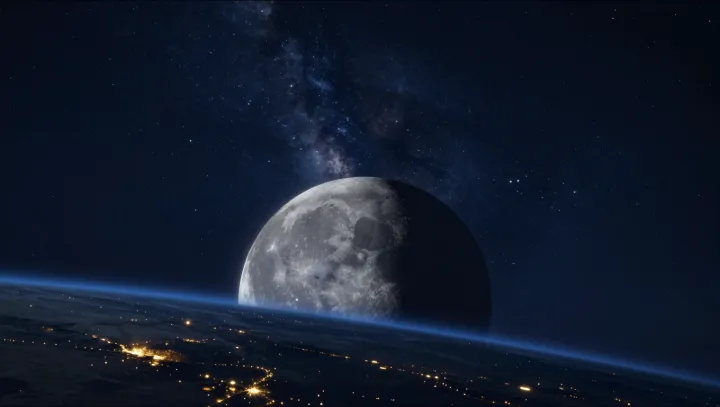
The Moon keeps what Earth discards: a visible record of collisions that struck both worlds. Its battered surface is less a sign of exceptional danger than of exceptional preservation, because the forces that erase impact craters on Earth operate weakly, if at all, on the Moon. The difference is profound.
Earth is an aggressive editor. Wind, rain, rivers and ice wear away exposed craters, while sediment can bury them; plate tectonics also recycles and deforms the crust, carrying portions of the ocean floor into the mantle. The atmosphere offers another filter, burning up many smaller incoming objects before they reach the ground. Large impacts still leave their mark, but finding an old crater on Earth often means looking beneath vegetation, sediment or water.
The Moon is no perfect archive, either. With no substantial atmosphere or active plate tectonics, it has little of Earth's power to erase its surface, yet later impacts can destroy older craters, and micrometeorites gradually churn the loose surface material known as regolith. Ancient volcanic flows also buried craters beneath broad plains. Even so, many lunar scars remain visible, giving scientists a way to compare surfaces by counting their craters: generally, a more heavily cratered surface has been exposed longer. Above Earth, the Moon holds open a record that its larger neighbor has repeatedly revised.