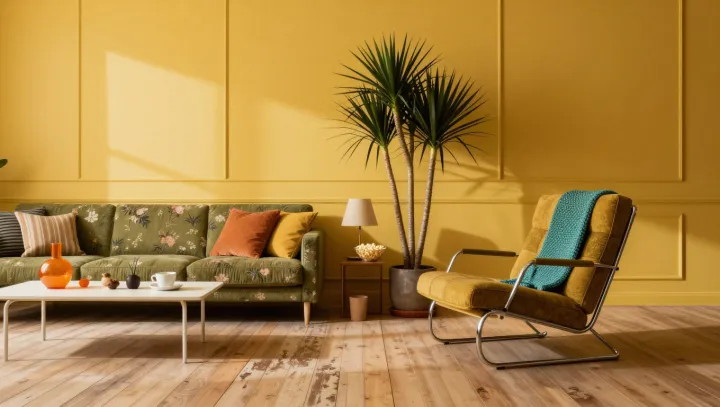
Yellow paint is never acting alone. On a sunlit wall, a mellow shade can glow like butter; beneath an intense lamp or beside a stark white sofa, the same color may feel noticeably sharper. The difference is not necessarily in the paint. It is in the company it keeps and the light that reveals it.
Lighting deserves the first interrogation. Daylight shifts in intensity and color as it moves across a room, while lamps with a warm color temperature tend to reinforce yellow and amber tones. Cooler light can make a yellow surface appear less golden, though the result also depends on the lamp's spectral power distribution: bulbs with similar color temperatures do not always render colors alike. Brightness matters, too. A strong beam on a saturated wall can make the color feel more forceful than it does in a shaded corner.
Furniture can soften the argument. Honeyed wood, tan upholstery and rust textiles share some of yellow's warmth without matching it exactly; olive or leafy green accents introduce contrast while keeping the palette connected. Stark white and cool gray can heighten the wall's apparent warmth through simultaneous contrast, making the yellow seem more insistent. Before committing, paint large samples on more than one wall and view them beside the furniture in daylight and lamplight. A small chip offers little company. The room, after all, is where the color must live.