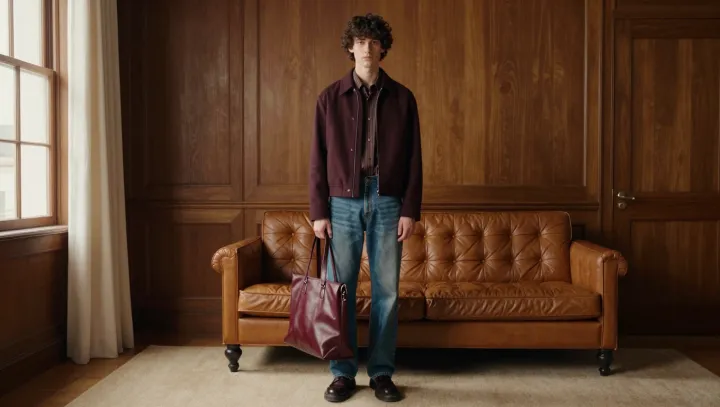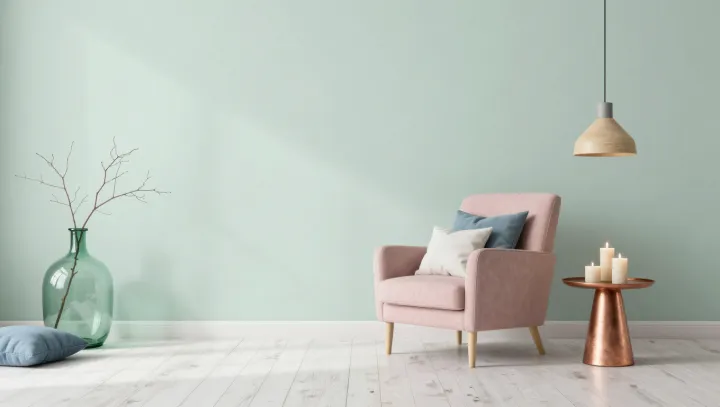
A quiet corner needs contrast, not spectacle. A pastel armchair against light wood and muted furnishings may appear spare, yet its interest lies in the differences between surfaces: the softness of upholstery, the grain of timber and the shadows that gather where one material meets another.
Restraint makes those details matter more. In a room with few competing colors, visual weight shifts toward shape and texture: a rounded chair can feel substantial beside a slender wooden table, while a woven throw gives the eye a pattern without adding a decorative print. Light plays its part. Across matte fabric, it spreads softly; along the grain of a wooden surface, it reveals variations that paint might conceal. The result is not an absence of detail, but a different way of noticing it.
Natural materials also make simplicity more forgiving. Wood grain varies from piece to piece, and textiles crease and soften with use, so a carefully edited corner need not feel sealed off from ordinary life. That does not mean every surface must be rustic, or every object handmade. A smooth tabletop beside a textured cushion can provide enough contrast, provided the furnishings have room to breathe. Too many accents compete. A useful chair, a place to set a cup and a fabric that invites touch can do more for the corner than another ornament. In the quiet left between them, even a small shadow earns its place.