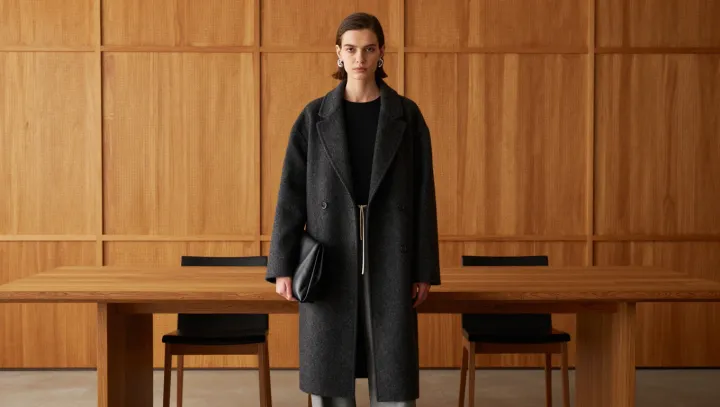
Black is rarely just black. A broad-shouldered coat, a dark top and charcoal wide-leg trousers can look more varied than their restrained palette suggests, because each surface handles light differently. The effect is not a trick of styling alone. It begins with the fibers and the way they are made into cloth.
Surface can be as expressive as color. A smooth fabric produces more specular reflection, directing light in concentrated highlights, while a rougher weave scatters it through diffuse reflection. A black satin top may therefore appear brighter where it catches the light than a matte wool coat beside it, even if both absorb much of the visible spectrum. Dye matters, too. Different dyes absorb different wavelengths, leaving a black with a blue, brown or green cast. Fiber type and the amount of dye absorbed also affect the result, while lighting can make those subtle undertones more or less apparent.
Cut gives those differences room to register. Broad shoulders create a firm outline, while the wide trousers introduce folds that alternate between illuminated planes and shadow; charcoal separates the lower half without breaking the dark palette. Proportion does quiet work. When choosing pieces, compare them in the light where they will actually be worn: a glossy top against a brushed coat offers one kind of contrast, while two matte fabrics rely more heavily on their weave and tone. In the end, the darkest outfit may owe its depth to the light it cannot keep.