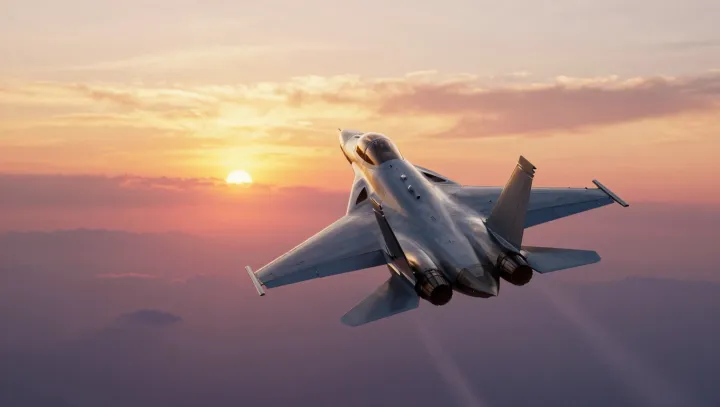
A fighter's silhouette is a bargain with the air, not a recipe for free speed. Swept wings delay the rise in wave drag as an aircraft approaches the speed of sound because the airflow component perpendicular to the wing's leading edge is lower than the aircraft's forward speed. That benefit has a price.
Slow flight exposes the other side of the bargain. A swept wing generally produces less lift than a comparable straight wing at the same angle of attack, so the aircraft may need a higher nose attitude or greater speed during approach. Sweep can also encourage airflow toward the wingtips, complicating stall behavior and control. Design matters enormously here: wing shape, leading edge devices and flight control systems can soften these penalties, while vortex lift can help some fighters at high angles of attack. None makes the tradeoff disappear.
The twin tails strike a different bargain. Tilting them outward can direct radar reflections away from some likely radar positions, reducing radar cross section from certain angles; it does not make an aircraft invisible. The price is directional efficiency: a tilted surface has less vertical area than the same surface standing upright, so some of its aerodynamic force acts vertically rather than sideways. Two tails can still provide yaw control and help maintain control when airflow is disturbed by the aircraft's body. The gray paint is a separate choice, useful for visual camouflage under many conditions. In the fighter's angular outline, speed and concealment share a narrow truce.