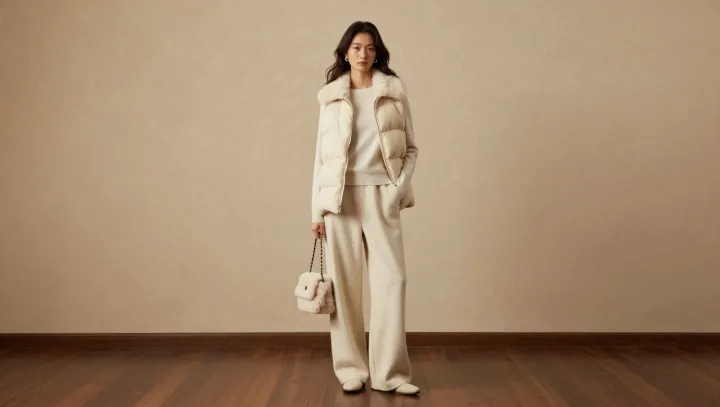
A cream winter outfit needs contrast, not another color. The difference lies in surfaces: a puffer vest catches light across its rounded sections, while a knit underneath breaks that light into smaller, softer variations. Wide-leg trousers add a third rhythm, letting folds do work that a bright accent might otherwise be asked to do.
Texture is the more persuasive form of contrast. A smooth vest can produce specular reflection, the concentrated glint seen where light strikes its surface at an angle; a matte knit favors diffuse reflection, scattering light across its uneven fibers. The eye reads those differences as boundaries, even when the garments sit close together on the color chart. Shadows matter, too. Ribbing darkens in its recesses, and seams cast narrow lines across the vest. The effect changes with the light: a window may reveal the knit's structure, while flatter lighting can make the pieces appear closer in tone.
Proportion gives the outfit its composure. The vest brings volume to the torso, but an open front or a visible strip of knit interrupts its bulk; below, generous trouser legs create movement rather than a single uninterrupted column. A slightly shorter vest can leave the waist visible, giving the wider cut room to register. Fit still matters. Too much fabric without a clear break can blur the distinctions that make the combination compelling. In the end, a fold of cloth holds its own patch of shadow, and cream becomes less a color than a way of noticing light.