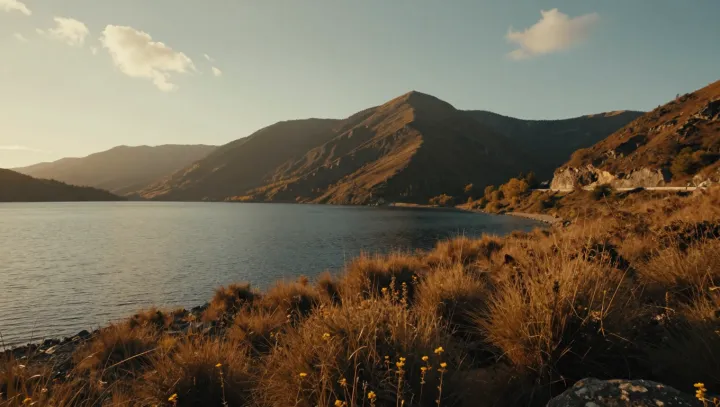
Turquoise water is not necessarily dirty water. Beneath rugged slopes and golden vegetation, a mountain lake can appear remarkably clear while displaying a color that seems almost too vivid to be natural. A winding road traces the shore, but the more interesting route is hidden upstream, where ice may be grinding stone into dust.
Glaciers are unlikely artists. As ice moves over bedrock, abrasion crushes minerals into particles so fine that meltwater can carry them into a lake. This suspended sediment, called glacial rock flour, scatters incoming sunlight; the balance of scattering and absorption can make the water look blue or green. The particles may be difficult to see individually, even when together they give the lake its distinctive hue. Clear water and colored water are not opposites.
The shade is a moving target. Sediment concentration, water depth, the angle of sunlight and clouds can all change what reaches the eye, while water itself absorbs more red light than blue. Some turquoise lakes owe their color partly to minerals or other conditions rather than glacial flour alone, so a photograph cannot establish the cause. The amount of meltwater entering a glacial lake can also vary with weather and season, changing how much sediment remains suspended. Beside the still shoreline, the color holds a record of motion far beyond the frame.