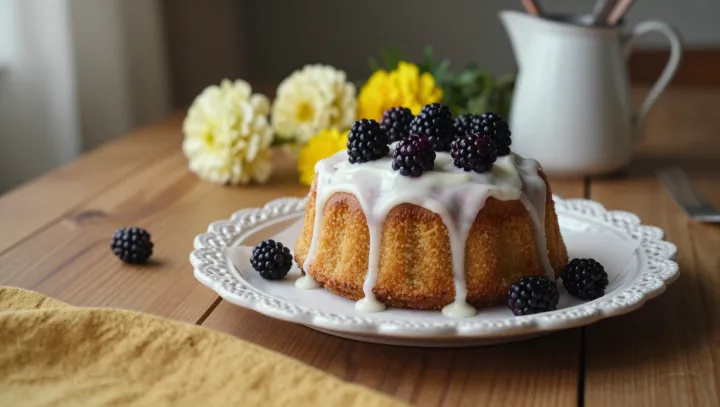
A blackberry turning red in a golden cake is not necessarily a berry gone wrong. Beneath the white icing, its dark skin and bleeding juice expose a chemistry that changes with the batter around it. Color is conditional. What looks black on the fruit can become ruby against the crumb.
Acidity is the strongest clue, though it is not the whole story. Blackberries owe much of their color to anthocyanins, water-soluble pigments whose molecular forms shift with pH. In acidic conditions, the red flavylium form is favored; as conditions become less acidic, other forms can contribute purple, blue or, at higher pH, less stable colors. The surroundings matter. Fruit acids, batter ingredients and dissolved pigments meet as berries soften, so the color in a slice need not match that of an intact berry. Dilution can also make dark juice look lighter and redder.
Heat is a less reliable painter than the oven might suggest. It can rupture fruit cells and release pigments, but it can also degrade anthocyanins; the outcome depends on acidity, temperature, time and interactions with other compounds. Red is not guaranteed. Nor does a reddish patch prove that the cake has become more acidic: pigment concentration and the loss of darker color components can change its appearance too. For a baker seeking distinct berries, less mixing can limit streaks, while a little acidity may favor red tones without promising an exact shade. Under that white glaze, the cake holds a small argument between what the eye sees and what the molecules are doing.