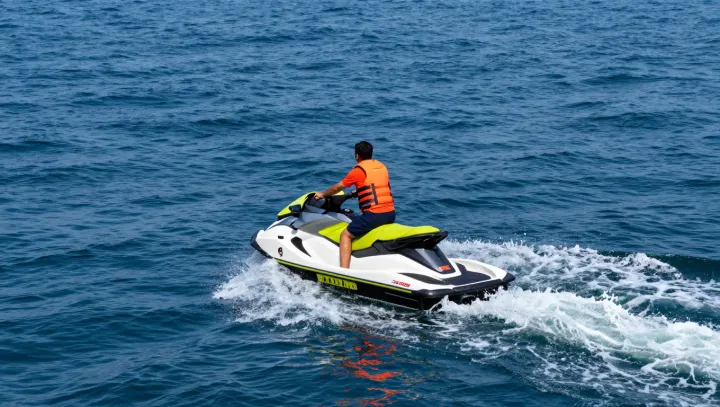
Speed can conceal a loss of control. A Yamaha personal watercraft cuts across the water, its rider wearing a life jacket and a foamy wake trailing behind. Yet on many such craft, releasing the throttle can make a turn harder to execute, even as the machine continues to coast quickly.
The distinction is thrust, not speed. Unlike a boat that can use a rudder to deflect water flowing past its hull, a typical personal watercraft turns by directing a jet of water through a movable nozzle. The engine drives an impeller, which pushes water out of that nozzle; turning the handlebars redirects the jet and produces a sideways force. Reduce engine power, and jet thrust falls. The craft's momentum keeps it moving, but the nozzle has less force to redirect its path.
That mismatch makes anticipation more valuable than a last instant reaction. Some models include off throttle steering assistance or braking systems, but their behavior varies and they do not erase stopping distance or guarantee a turn around an obstacle. Riders should learn the controls and limitations of their particular craft, maintain a safe distance, and follow the manufacturer's guidance rather than assume that a released throttle works like a car brake. The wake may look decisive; the water ahead offers no such promise.