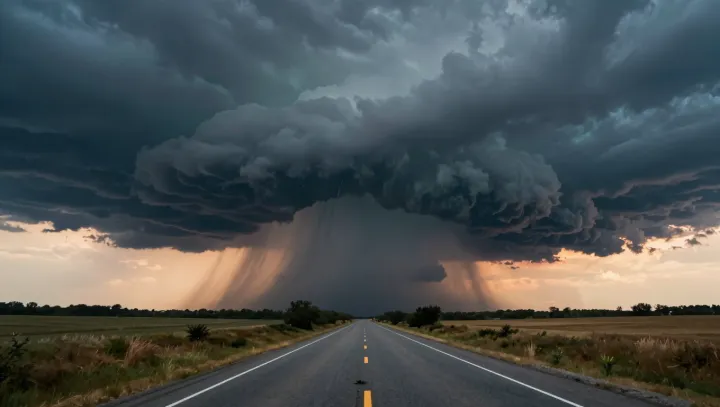
A rain curtain can be more deceptive than the storm above it. Beneath a towering cumulonimbus, falling drops may vanish into dry air before reaching the rural road below, leaving streaks known as virga. The road stays dry. Yet the disappearing rain can set the air itself in motion.
The hidden exchange is one of heat, not magic. As droplets evaporate, they draw energy from the surrounding air in the form of latent heat, lowering its temperature. Cooler air is denser than the warmer air around it and tends to sink; when enough rain evaporates, that cooling can strengthen a downdraft already descending beneath the cloud. Dry air makes a difference. It allows more droplets to evaporate, though humidity, wind and the storm's structure all affect what follows. Not every streak of virga produces a powerful gust.
The danger, when it develops, arrives sideways. A downdraft that reaches the ground spreads outward, sometimes producing a concentrated burst of wind called a microburst. Such winds can damage trees and structures, and their abrupt changes in speed and direction are a serious hazard to aircraft near the ground. A storm may produce a microburst with little rain reaching the surface, although rain can also accompany one. From a distance, the suspended curtain can look like the whole event. Beneath it, the empty road holds its own kind of weather.