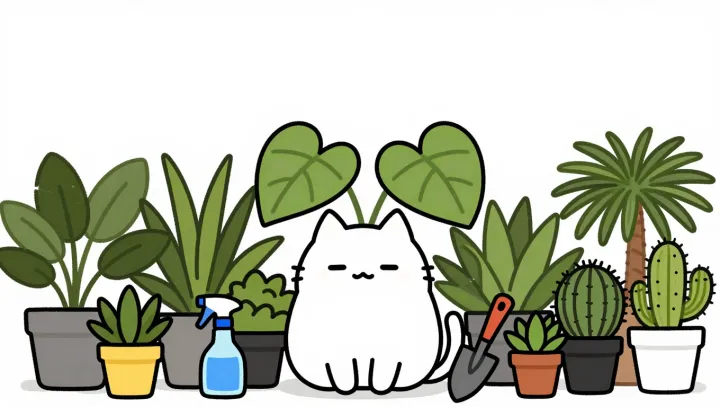
A white cat disappears between the leaves, but the greenery is no harmless hiding place. Beside the pots sit a spray bottle and a trowel; within reach are leaves that may invite a bite. The problem is not that the cat has suddenly abandoned meat. It is that curiosity can outrun caution.
Plant chewing is not a betrayal of a cat's biology. As obligate carnivores, cats depend on nutrients supplied by animal tissue, yet they may still mouth leaves during exploration or play. Some researchers have proposed that plant eating might help remove intestinal parasites, an inherited behavior from wild ancestors, although the explanation remains uncertain. Vomiting is not the whole story. Cats can chew plants without becoming sick, and a bite does not necessarily mean a cat is seeking fiber or treating an upset stomach.
The danger lies in the plant, not merely the bite. True lilies and daylilies can cause acute kidney injury in cats; even pollen or water from a vase can be hazardous. Other plants, including pothos, contain insoluble calcium oxalate crystals that can irritate the mouth and cause drooling or vomiting. Know what grows nearby. Keep toxic plants out of the home, check plant names against a veterinary poison database, and contact a veterinarian or animal poison service promptly after a suspected exposure. Do not induce vomiting unless a professional directs you to do so. The leaves remain still; the risk begins when the cat moves.