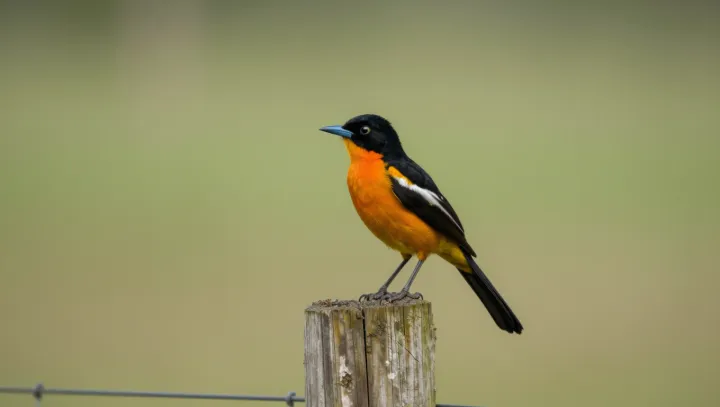
The campo troupial makes a striking case for taking what is already built. Orange and black plumage, a pale eye and a bold white wing patch give the bird an unmistakable appearance, but its nesting habits are just as arresting. It sometimes takes over nests that other birds still occupy.
That is no minor shortcut. Nest building demands material, effort and a suitable site; an existing structure offers a possible route around that work, although taking one from another bird can bring conflict. Ornithologists call this behavior nest usurpation. It is different from brood parasitism, in which a bird lays eggs in another species' nest and leaves the host to raise its young. The distinction matters because an occupied nest is not simply vacant real estate. For the bird already using it, a takeover can mean the loss of a breeding site and potentially a breeding attempt.
The plumage makes the troupial easy to admire, but it does not explain the whole bird. The bright orange, black and white that catch an observer's eye say little by themselves about how an individual finds a nest or whether a particular attempt to take one will succeed. Not every nest it uses is necessarily occupied when it arrives. The sharper fact is that some are, and that a structure made to shelter one bird's young can become a site of contest for another. Beauty and possession meet at the rim of a nest.