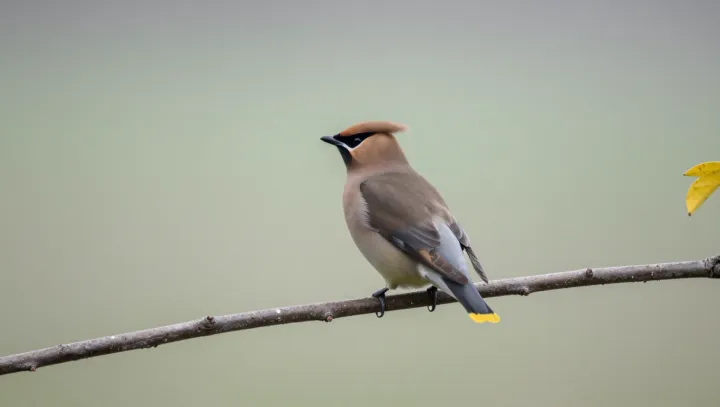
An orange tail can reveal an unexpected meal. The cedar waxwing, known for its swept-back crest, black facial mask and yellow-tipped tail, sometimes grows orange tips instead. The difference is not a trick of the light: pigments in the berries of certain introduced honeysuckles can become part of the bird's developing feathers.
The timing matters as much as the menu. Waxwings cannot repaint feathers that have already finished growing, but during molt, when old feathers are replaced, dietary pigments can be deposited in new ones. Honeysuckle berries can supply rhodoxanthin, a red carotenoid; mixed with the yellow pigments ordinarily present, it can give the tail band an orange appearance. Not every honeysuckle meal produces the effect. The bird must eat the berries while the relevant feathers are developing, and the available pigments must reach those feathers.
The crest is still the better introduction. Raised or flattened, it lends the waxwing its sleek profile, while the dark mask and tail band help distinguish it among fruit-eating birds. These birds often travel in flocks and feed on berries and other small fruits, moving where food is available. An orange tip is therefore not evidence of a different species, nor proof that a bird recently ate a particular berry: it records conditions during feather growth. The bird carries that trace until the affected feathers are replaced. Against a line of winter branches, a small orange band holds the memory of a meal.