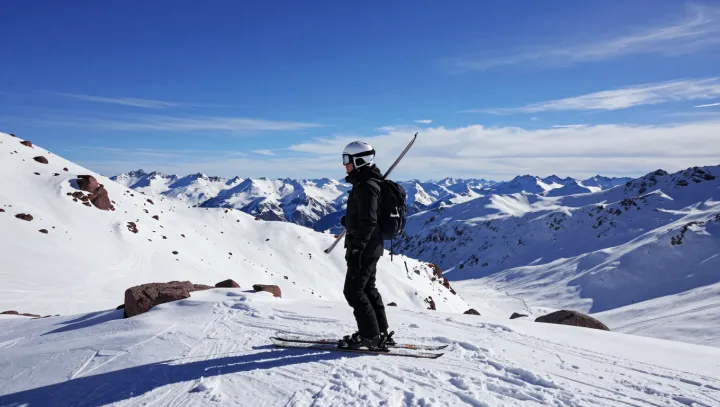
A ski track is not a safety certificate. One skier may cross a slope without incident, only for the snow to collapse beneath the next. The difference can lie in a shift of weight, a slightly altered route, or a weak spot hidden beneath an apparently continuous surface.
The snowpack is less uniform than it looks. Wind, snowfall and temperature changes build layers that vary across a slope, so a weak layer may sit closer to the surface in one place than another. A skier can disturb that layer where it is easier to reach; if the resulting fracture propagates, a slab above it can break loose. The first crossing may also leave the snowpack closer to failure, though it is impossible to infer stability from a track alone. Snow offers no receipt.
Rescue gear is necessary, not permission to gamble. Every member of a backcountry party should carry an avalanche transceiver, probe and shovel, and train together in companion rescue before entering avalanche terrain. Check the local avalanche forecast, assess slope angle and terrain, and be prepared to turn back when conditions or uncertainty warrant it. Traveling one at a time through exposed terrain can limit how many people are caught, but it cannot make the slope safe. Call emergency services as soon as possible if an avalanche occurs. In the quiet after a track is laid, the slope has answered nothing.