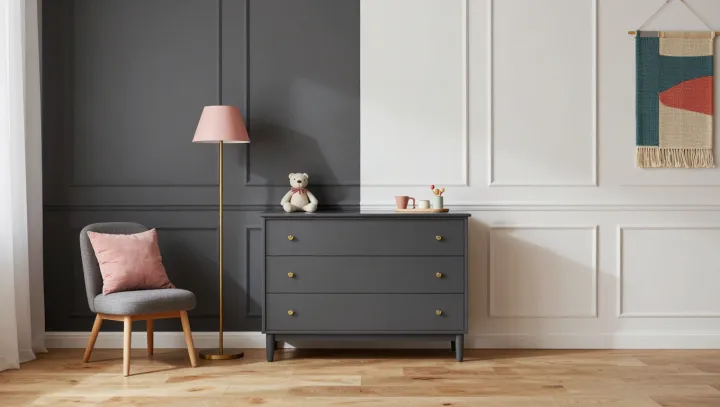
Color cheats. The same gray that feels soft in one room can turn oddly chilly in the next, and the paint itself is not the variable. What changes is the light vector, the spectral mix that reaches the wall, and the environment bouncing that light back to your eye.
North-facing light tends to cut warmth, so a gray with even a slight blue bias can appear almost steely, while south-facing light, richer in warm wavelengths, pushes the very same formula toward a muted beige impression. This is not mood; it is physics: correlated color temperature and spectral power distribution reshape how your cones register that so-called neutral shade.
Outside the glass, the plot thickens. A courtyard of red brick throws a subtle rust reflection that can nudge gray toward taupe, yet a canopy of dense foliage adds a green cast that cools it down again. Even interior finishes act as silent collaborators, with high light reflectance value surfaces amplifying shifts and low-sheen textures damping them, so a single paint code ends up performing like several different colors across a home.