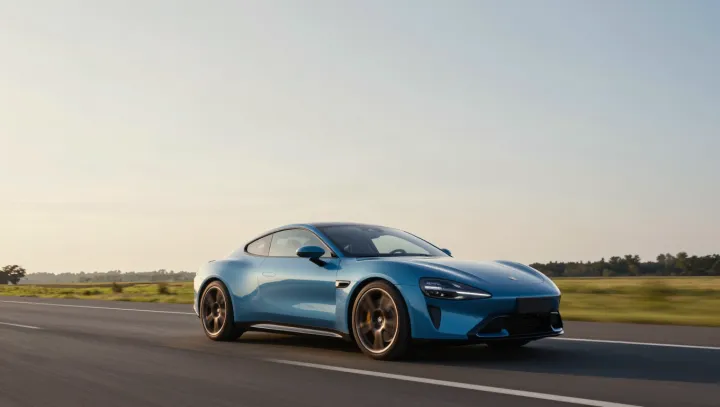
Air, not horsepower, decides which supercars stay beautiful and stable at 300 km/h. A clean, flowing body can be tuned to knife through the air, yet designers often accept more drag so the car does not feel nervous when a driver lifts off the throttle mid‑corner at extreme speed.
The uncomfortable truth is that a slightly slower car on paper is often faster on a real circuit. Engineers chase aerodynamic balance, the ratio of front to rear downforce, because that balance locks the contact patches into the asphalt and keeps the center of pressure from migrating as speed rises. That means bigger diffusers, deeper splitters, active rear wings and carefully sculpted side intakes; all of them add drag, and all of them tame lift and pitch. A few km/h of lost v‑max is the price for turn‑in that stays predictable when the speedometer shows 300.
Equally counterintuitive is how the prettiest silhouettes are sometimes wind‑tunnel compromises. To control yaw stability and crosswind response, surfaces are twisted so vortices shed where computational fluid dynamics says they should, not where a pure styling sketch might place them. The result can be a higher drag coefficient but a car that tracks straight over cresting bumps while the driver’s hands barely move on the wheel.