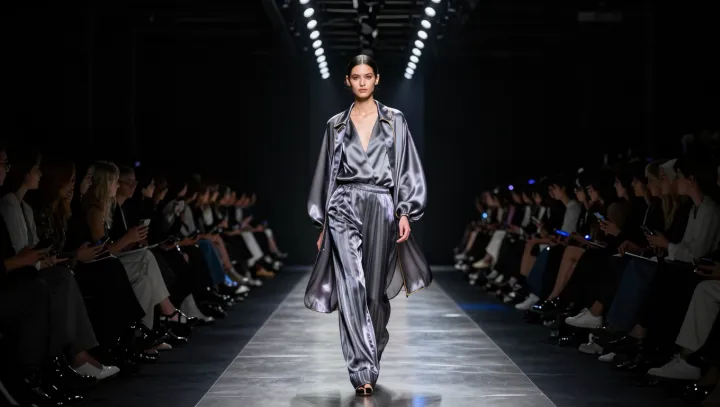
Glittering excess on the runway is not a mistake; it is the business model. Those towering shoulders, glass corsets, or inflatable skirts function as prototypes, compressing a brand’s identity into a few extreme silhouettes that buyers, editors, and influencers can read at a glance. The show is less a wardrobe and more a visual manifesto that sets coordinates for an entire season of product development.
The real engine is scale. Buyers sit there translating fantasy into stock-keeping units, deciding which fabrics, color stories, and pattern blocks can survive cost accounting and fit testing. A sculptural gown becomes a T-shirt neckline. A surreal latex boot turns into a slightly sharper heel at a mid-market chain. Once those ideas hit computer-aided design systems and global supply chains, they propagate fast through fast-fashion copycats and licensed diffusion lines.
Power, not practicality, explains why the unwearable still wins. Fashion week is a closed-loop system linking luxury houses, media, and retailers, and the runway look is the leverage point that grants a label aesthetic control far beyond its own sales volume. You do not buy the crystal cage dress; you buy the watered-down blazer that still carries its outline, a faint echo of spectacle stitched into your daily uniform.