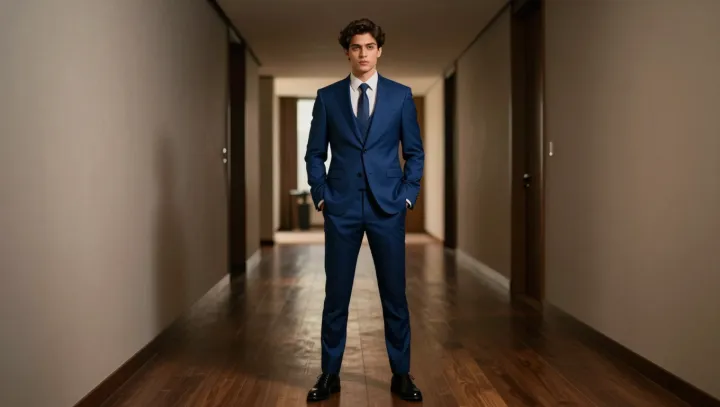
Pressed fabric does what a CV cannot. In controlled experiments, men in tailored suits are rated as more competent and higher-status than the same men in casual wear, even when observers are told their skills and income are identical. What shifts is not information but the brain’s fast status-recognition circuitry, primed long before any conscious correction kicks in.
The blunt truth is that a suit hacks ancient dominance detection. Clean lines exaggerate shoulder-to-hip ratio, a classic sexual dimorphism cue linked to perceived strength and resource control, while dark, uniform color blocks mimic authority uniforms that historically signalled power. Studies using eye-tracking and response-time measures show observers make these judgments within split seconds, before any explicit knowledge about pay or qualifications can be applied as a check.
More insidious is how cognitive shortcuts lock in the effect. Once a man is visually tagged as high status, the halo effect and status-enhancement bias inflate ratings of intelligence, leadership and even moral character. Declared facts about equal income or equal expertise sit in working memory, but visual impression rides on deeper perceptual priors encoded through years of exposure to boardrooms, political stages and luxury branding. The suit is not just cloth; it is a fast, efficient interface to those priors, and the data show that awareness alone rarely breaks that spell.