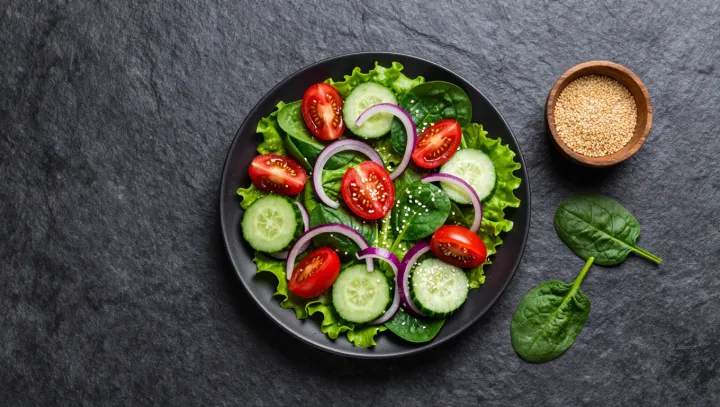
A salad wins against pasta not because lettuce is virtuous, but because hormones are programmable. A bowl built on leafy greens, bitter vegetables and crunch looks light, yet it can be wired to hit the same satiety switches as a prescription drug if you choose the right toppings.
Hunger, at its core, is a chemistry problem, not a character flaw. Add a serious protein load from eggs, grilled fish or tofu and you sharply raise peptide YY and GLP-1, the gut hormones that slow gastric emptying and tell the hypothalamus you are done. Drizzle extra-virgin olive oil or avocado, and that fat triggers cholecystokinin while flattening the post-meal insulin spike that drives rebound cravings. Toss in beans, lentils or chickpeas and you add viscous soluble fiber, which ferments into short-chain fatty acids that further amplify GLP-1 signaling.
Pasta, by contrast, is metabolically lazy. It is dense, fast to eat, and dominated by refined starch that floods blood glucose and forces insulin to overcorrect, so you crash and reopen the fridge. Build the salad with volume from non-starchy vegetables, protein in every bite, and fats that require chewing, and you stretch gastric distension, slow glucose absorption and keep leptin and insulin in a tighter loop. You are not being stronger than the pasta. You are quietly rewriting the code that decides when you feel full.