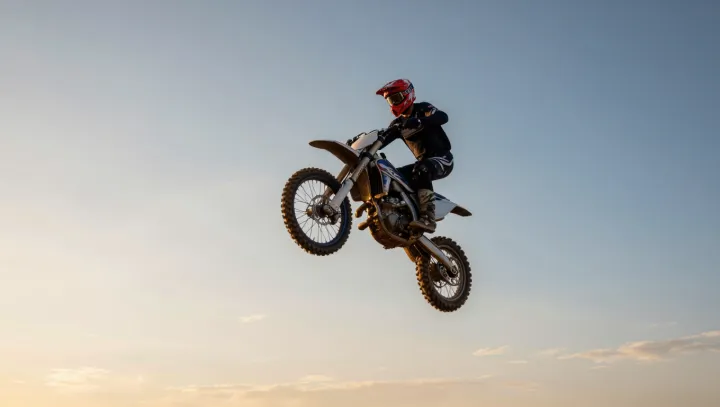
Wheel lift, tire howl, and a sliding rear end look like chaos until a rider starts treating the bike like a lab rig. What passes for bravery is often just repeatable control of center of mass, tire friction, and angular momentum, rehearsed until the outcome is as boringly consistent as a classroom demo.
The blunt truth is that most headline stunts are governed less by courage than by geometry. Shift the rider’s body and the combined center of gravity moves; bring it behind the rear axle and a wheelie stops being magic and becomes torque versus weight distribution. Lock in a given throttle input, a fixed gear ratio, and a specific body position, and the front end rises at the same point on the same stretch of asphalt with machine-like reliability.
The same logic strips the mystery from drifts and stoppies. Once a rider knows the approximate coefficient of friction of warm rubber on that surface, brake pressure and lean angle become variables in an equation, not a dare. Momentum, expressed as mass times velocity, sets exactly how far a bike will slide or pivot if grip breaks at a known speed. Riders then tighten the loop: they adjust tire pressure, suspension preload, and entry speed, observe the result, and repeat until the stunt behaves like a controlled experiment instead of a coin toss.
So the spectacle does not come from being fearless. It comes from shrinking the unknowns until the bike’s behavior sits inside a narrow, plotted band of outcomes that physics will almost never violate.