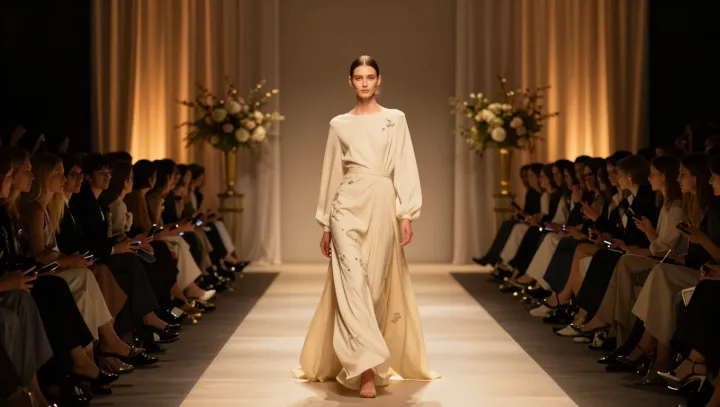
Runway light now falls first on phones, not fabric. Flashing screens rise before models even turn the corner, as shows are staged less for buyers in the room than for viewers swiping in silence. The catwalk has become a broadcast studio, calibrated to fill vertical frames and loop as thirty‑second clips across platforms that reward shock over subtlety, and speed over structure.
What looks like creative excess is often a performance of metrics. Houses design “stunt looks” as if they were pre-packaged thumbnails, built to spike watch time, trigger reposts and feed the algorithmic logic that now shadows every collection review. A dress that photographs well mid-spin or explodes in a cloud of confetti can generate more engagement than a jacket whose pattern cutting quietly rewrites proportion, even though construction, fit and textile innovation still define the craft on which these brands claim authority.
Yet attention, not artistry, is the variable investors can graph on a deck. Viral reach promises leverage: more eyeballs, cheaper acquisition, faster sell-through on logo goods that subsidise the showpiece circus. The risk is that garments slide into the role of props, supporting content that ages at the speed of the feed, while the slower work of silhouette, drape and material research struggles to justify its cost in a zero-sum marketing budget where every look must serve as both product and post.