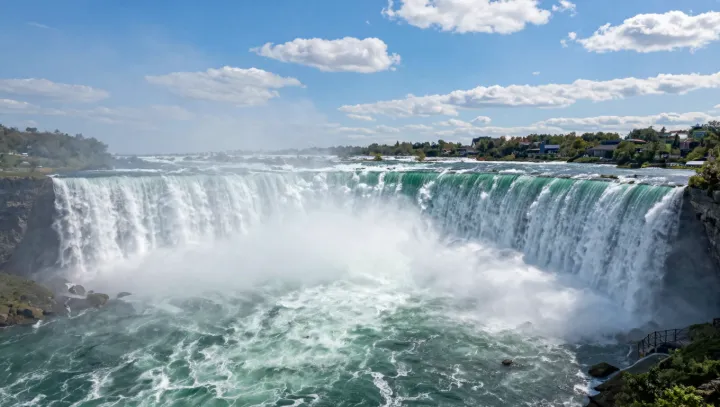
Niagara Falls looks static because the human eye is a poor geologic witness. The river is busy. Water hammers the brink, undercuts softer shale and sandstone, and pries blocks from overlying limestone and dolostone with hydraulic pressure and freeze–thaw cycles, driving retreat that once reached roughly a meter per year.
The apparent paradox is mostly scale and framing. A cliff hundreds of meters wide can shift by a meter and still present the same horseshoe outline, mist plume, and roaring white curtain to a visitor who stays on a fixed overlook for a few minutes. Generations return to the same railings and photo angles, so their memory locks onto tourist infrastructure, not the subtle upstream migration of the lip. Added to that is engineering: flow regulation works upstream redistribute discharge, spread erosive energy, and armor selected sections, trimming the natural retreat rate while preserving the spectacle.
Equally distorting is lifespan. Human memory spans only a handful of decades, short against fluvial incision and headward erosion that operate over immense intervals. A child and that same person in late adulthood can stand in almost identical camera positions and see a wall of water framed by the same hotels and parks, so continuity feels absolute even though the brink has crept upstream by multiple meters. To geology, the falls are racing. To visitors, they are almost still.