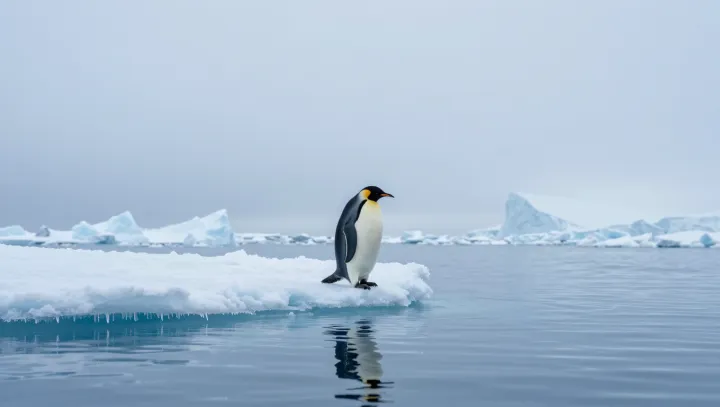
Antarctic air should win. Physics says so. Yet emperor penguin skin can sit above the ambient temperature while the bird spends no extra metabolic energy on heating.
This is not magic. It is surface engineering. The outer feather layer forms an ultra‑cold shell, often several degrees below the air, created by dense, overlapping filaments and trapped still air that promote radiative cooling while slashing convective heat transfer. That frozen shell acts as a thermal shield, so the temperature gradient across the plumage, not the bird’s core, does the work. Infrared imaging has shown that only the beak and parts of the feet break this icy armor.
More radical is what happens beneath. A thick layer of subcutaneous fat, with low thermal conductivity, sets a deep barrier between warm core organs and the skin. Within that layer, tight vascular control uses vasoconstriction and counter‑current heat exchange to throttle how much warm blood reaches exposed areas. Blood flow can be dialed down so sharply that the skin receives just enough warmth to stay above freezing, yet not enough to leak significant heat to the air. The result is a counterintuitive state: skin warmer than the wind, feathers colder than both, and core metabolism that does not have to spike like a heater at all.