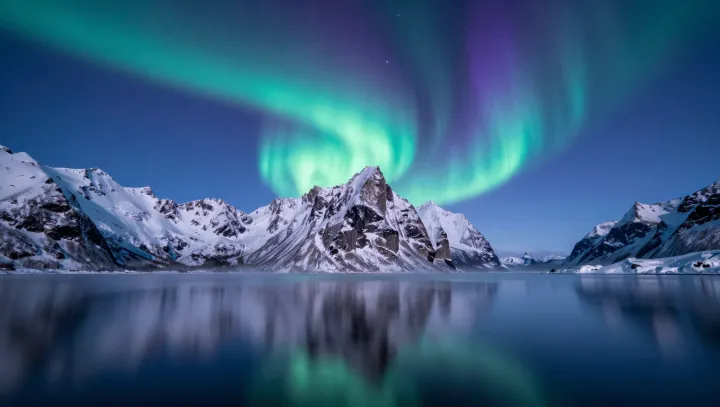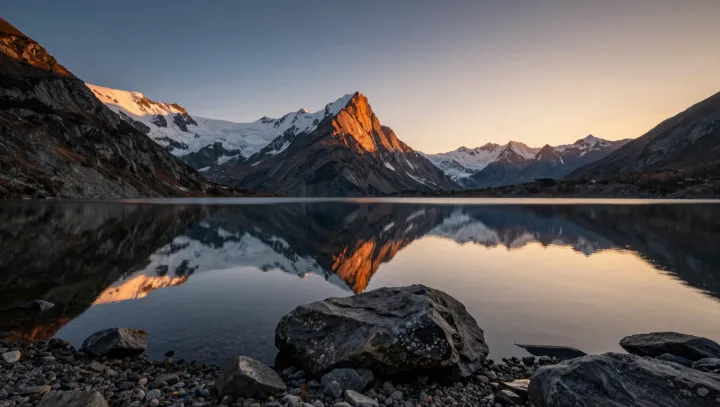
Perfection on a mountain lake is not romantic; it is conditional. A mirror appears only when the surface behaves like engineered glass, and that demands a rare truce between air, water, and light. With wind shear suppressed to almost nothing, capillary waves lose their energy source and decay, leaving a surface where surface tension dominates and roughness shrinks below the scale that scatters light toward every direction.
The harder truth is that temperature, not scenery, decides whether that stillness matters. As the water cools, its density rises until convection slows and vertical mixing quiets; fewer internal currents reach the surface to wrinkle it from below. Only then does the lake approximate a single, coherent interface, thin yet stable, that can act as a specular reflector rather than a diffuse one, redirecting sunlight like a polished metal plate instead of a frosted window.
Most visitors blame their camera when the reflection looks dull; the real culprit is geometry. When the sun sits low and light skims across the water at a shallow incidence angle, the Fresnel equations favor reflection over transmission, boosting the brightness and sharpness of the image bounced toward an observer. Filters can mute glare, but they cannot conjure order in a chaotic wave field. Physics must first erase the chaos, patiently, before the mirror appears at all.