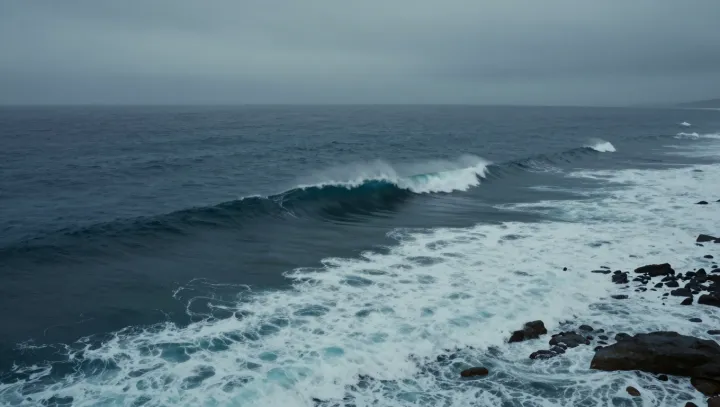
Pastel water hides the harsh truth: that slight shorebird is running a guidance system humans can only envy. Each step through the foam is informed by magnetoreception, a sensory channel that turns Earth’s magnetic field into a quiet scaffold for direction and position, even when coastlines blur into a uniform strip of sand and glare.
More audacious still is how the bird layers signals. A solar compass in the eye, corrected by circadian rhythm, uses the sun’s arc as a moving reference, while the vestibular system and optic flow in the bird’s vision track motion against fixed rocks, rip lines and wave fronts. What looks like aimless foraging is a continuous solution to a three‑variable equation: magnetic inclination, solar azimuth, coastal texture.
Human map reading feels clumsy beside this. Cartography freezes shorelines into symbols; the bird treats them as dynamic gradients of light, odor, and polarization pattern, updating a mental map with every wingbeat and stride. In the low glow of pastel surf, where inked contour lines would smear into nonsense, the smallest body on the beach holds the sharpest sense of where the coast will lead next.