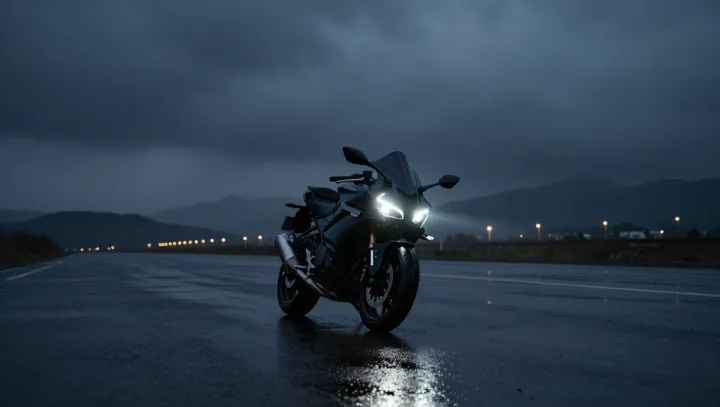
Water wins first. A thin film on asphalt can lift a modern sportbike even when electronics and rubber are working exactly as designed, because the limiting factor is fluid pressure, not software.
The awkward truth is that traction control fights the wrong enemy in this scenario, since it manages torque at the rear wheel but cannot punch through standing water once hydrodynamic lift exceeds the vertical load at the contact patch. At high speed, the tire’s tread channels reach their flow limit, water can no longer be evacuated, and pressure under the footprint rises until the tire rides on a wedge of liquid. That is classic dynamic hydroplaning, described by basic fluid mechanics and tire load equations, not by any algorithm in the bike’s control unit.
The second problem is geometry. Wide, low-profile sport tires give stunning grip on dry tracks yet spread the same weight over a larger area, which drops ground pressure and makes it easier for water to form a supporting layer. Even advanced silica compounds and multi-zone tread patterns only help while some rubber still keys into the asphalt macrotexture. Once a continuous film forms, antilock braking and traction control can only reduce power or release brake pressure; they cannot create friction where the coefficient of friction has effectively collapsed to near zero.