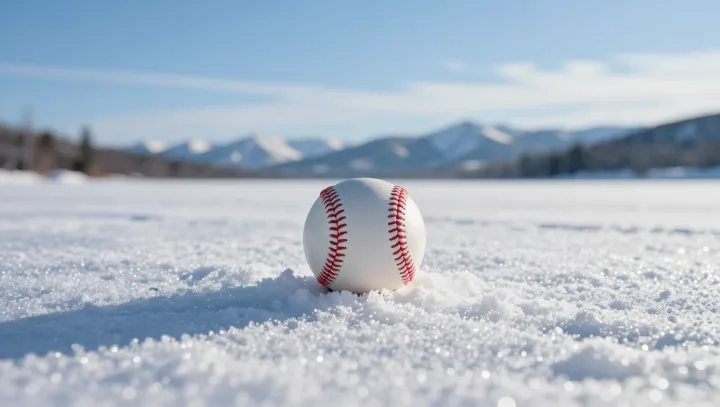
Snow does not just tweak baseball. It rewrites it. A few millimeters of compacted crystals drop the coefficient of friction between shoe and ground and between ball and surface, turning a grass field into something closer to a low‑grade ice rink where every slide becomes a physics experiment.
The harsh truth is that full‑speed, regulation play on untouched snow is almost impossible, so organizers quietly hack the environment. They pack or broom the surface to roughen the contact patch, scatter abrasive material, and sometimes swap in brightly colored, slightly softer balls whose coefficient of restitution is tuned to avoid the wild, skidding hops that a standard leather ball would produce on a semi‑frozen layer.
Defense changes first. Fielders set deeper, accept slower routes, and rely less on sharp cuts because the static friction they need for explosive lateral moves is gone, replaced by a dominance of kinetic friction that punishes any overcommitted step. Pitchers trim velocity or spin when wet seams and colder air threaten grip stability and consistent Magnus effect, while hitters learn that a ball meeting a chilled, slightly compliant surface will lose exit speed and produce shorter, flatter flight paths than the same swing on warm grass.