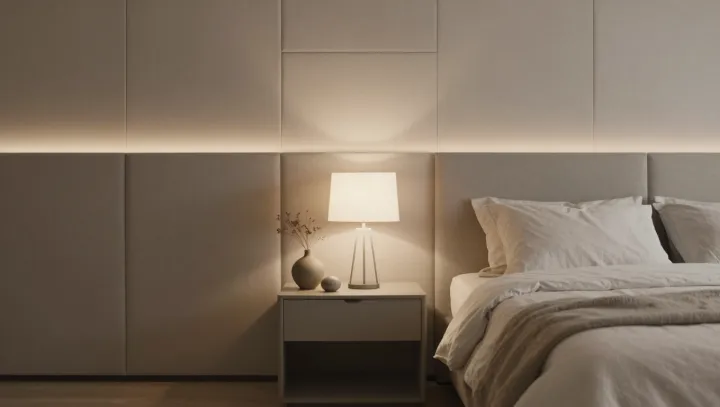
Silence, not sparkle, now does the bragging in luxury bedrooms. Where marble slabs and crystal fixtures once announced status, designers are wrapping walls in padded upholstery, building double-layer partitions and tucking warm LEDs into coves and headboards. The room starts to feel less like a showroom and more like a private suite, engineered to calm the nervous system instead of impress guests across a dinner table.
The shift is blunt: money has moved from surfaces into performance. High-net-worth clients are paying for acoustic insulation, sound transmission class ratings, and vibration damping so a bedroom reads almost anechoic. That quiet is expensive; it demands layered gypsum, resilient channels, dense doors, and custom HVAC baffles. On top of that hardware, designers specify wool, suede, and bouclé panels so the hand registers depth and softness where the eye once chased shine.
Visual noise is treated as a liability. Open bulb chandeliers are replaced by indirect lighting, warm color temperature strips hidden behind fascias, with dimming curves tuned to circadian comfort rather than drama. Power outlets, switches, even wardrobes vanish behind flush panels, creating a near-monastic field of matte planes. Price still matters, of course, but the new flex is that a room looks almost plain on camera while performing like a recording studio wrapped in a five-star bed.