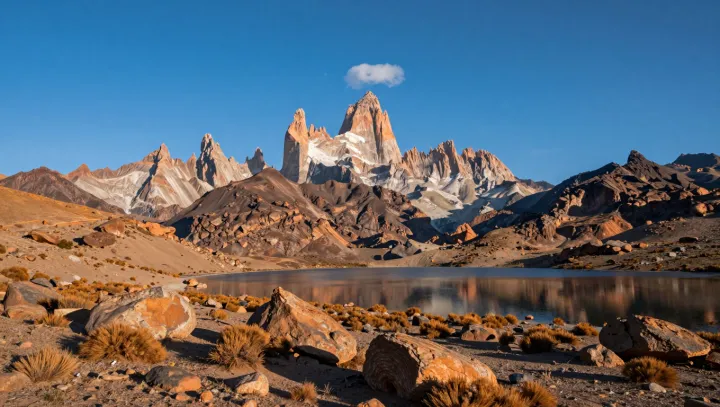
That glowing, hyper‑sharp ridge is not a trick of the camera; it is a stripped‑down experiment in atmospheric optics. In arid air, the column of gas between eye and rock holds little water vapour and relatively few aerosols, so Rayleigh scattering and Mie scattering contribute less veiling glare than they do in humid zones loaded with droplets and fine particles.
The counterintuitive part is how brutally simple the effect is. Dry air cuts down the tiny suspended droplets that act as billions of microscopic lenses, which in moist conditions scatter short‑wavelength light sideways, wash shadows with stray photons and build a bright foreground fog that compresses dynamic range. With that haze removed, direct sunlight carves out micro‑shadows along every fracture and grain, boosting edge contrast in a way that camera sensors and human retinas both interpret as extra sharpness.
Equally decisive is the way clouds and humidity flatten illumination. Under an overcast sky, diffuse skylight dominates; specular highlights on bare rock are muted, and the bidirectional reflectance distribution function of those surfaces shifts toward a soft, low‑contrast profile. In desert clarity, by contrast, hard, collimated sunlight and a dark, clean air path turn the same geology into a high‑contrast relief map, making the mountains seem closer, harder and almost unreal.