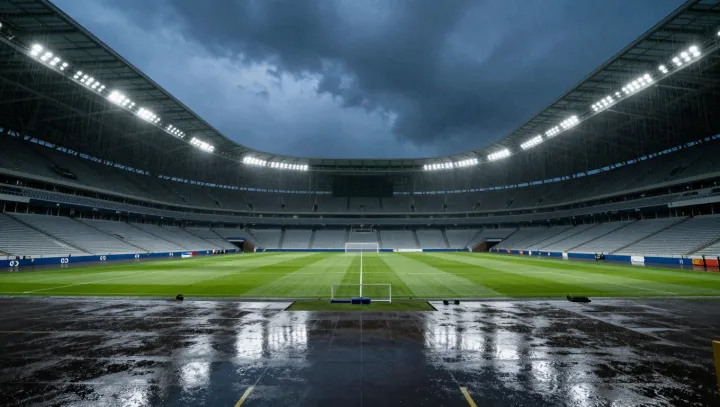
Rain on concrete should feel dim. Under modern stadium floodlights, it does not. Water, plastic seats, even empty walkways flare with hard edges because engineers decided that photons, not paint, would carry the show.
The blunt truth is simple. Those towers are not wasteful at all. High-power LED modules push luminous efficacy far beyond what a tungsten filament ever managed, converting a large share of electrical input into visible radiation instead of heat. Paired with precision reflectors and secondary lenses, that output is shaped into narrow beams, so lux levels on the turf can exceed office lighting by an order of magnitude while spilling surprisingly little light into the night sky or the parking lots.
The empty stands look excessive. They are not the design target. Broadcast cameras demand uniform illuminance and tight correlated color temperature, so every diode is driven by electronic drivers that trim flicker, regulate current and avoid the brutal overvoltage that once burned through metal-halide lamps. Because LEDs tolerate instant switching and dimming, operators can cut sections, modulate intensity, and keep average power draw well below what a handful of old incandescent floor lamps would waste as heat for far less useful light.