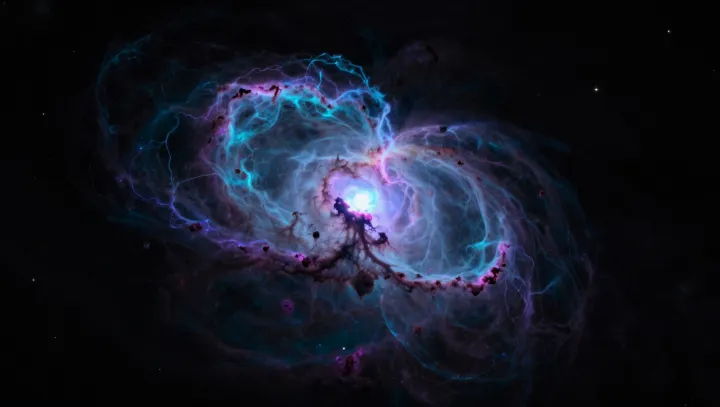
A nebula looks fragile, but its outline is anything but fleeting. Bright knots and dark filaments may swirl, yet the gross structure changes with agonizing slowness. Gas drifts. Dust evaporates. Stars ignite. Still the contour lingers in the sky.
The core reason is that chaos here runs on a glacial clock. Typical gas speeds inside an H II region or molecular cloud are modest compared with its vast diameter, so the crossing time stretches over astronomical ages, locking the large-scale geometry in place while local eddies churn. Gravity and gas pressure settle into a kind of hydrostatic equilibrium, a balance that resists rapid reshaping even as individual clumps fall, collide, or disperse.
Equally underestimated is how sculpting forces are directional rather than random. Radiation pressure and photoionization fronts from massive stars carve cavities along preferred paths, then keep reinforcing those cavities as long as the stars shine. Shock waves from earlier outflows leave density contrasts that act like scaffolding, guiding later flows along similar channels. To distant observers, the outline stays recognizable, though every photon is reporting a structure in slow, constant negotiation with itself.