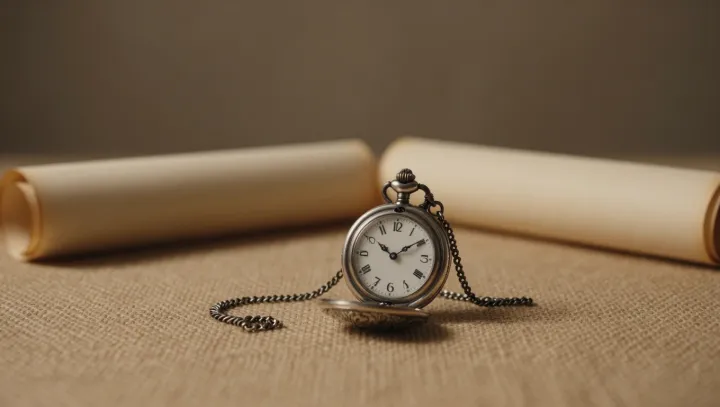
On the table, the watch wins. Not you. Its metal case, its frozen hands, its exact weight in your palm present a stability your own past cannot match, because the brain treats experience as disposable code once it has mined it for meaning.
The harsher claim is this: objects feel more real because they do not compress. Episodic memory undergoes ruthless neural pruning and synaptic downscaling, a metabolic efficiency hack that keeps you functional but turns years into a low‑resolution archive. The watch, by contrast, preserves high‑frequency detail in brass and glass, each scratch a persistent data point that does not decay with every sleep cycle. You sense it instantly through proprioception and tactile feedback, while your own history must be reconstructed through scattered engrams and narrative guesswork.
Even identity leans on this quiet bias toward matter. Cognitive scientists note that people outsource continuity to external artifacts: a ring, a key, a device, a pocket watch. These items act as memory indices, offering stable external reference frames when hippocampal encoding has already thinned the story. So a motionless dial can feel sharper than whole seasons of your life not because the watch is sacred, but because biology runs a lossy compression format and brass does not.