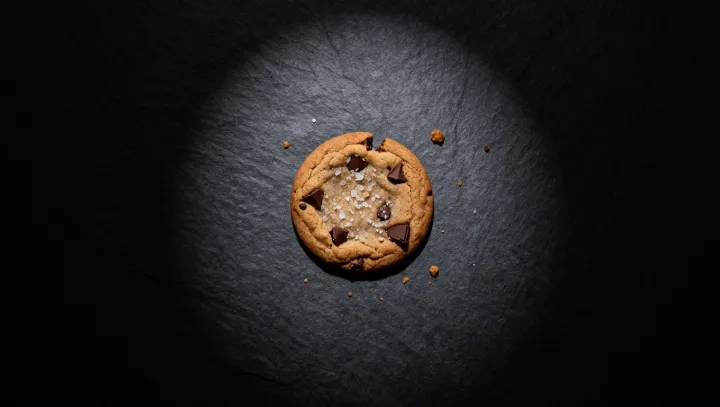
That missing crescent of cookie is not about hunger at all. It is about a tiny economic dispute inside your skull, where the brain treats one unfinished bite as an investment it refuses to write off, even though stopping would cost less effort and fewer calories than the argument itself.
Behind that stubborn feeling sits dopamine, firing in the striatum like a contract already signed. You started eating, so the reward circuit predicted a full, clean finish and tagged it as a goal state. When you pause with one bite left, a reward prediction error kicks in, flagging the scene as incomplete and mildly wrong, the way an unfinished task nags in working memory.
The odd part is that your so called rational control system often joins the wrong side. The prefrontal cortex, which handles cost benefit calculation and inhibitory control, is highly sensitive to sunk cost bias and loss aversion, concepts borrowed directly from behavioral economics but wired into synapses. You did not just eat a cookie; you opened a loop. Stopping now feels like wasting the effort already spent, so the brain tries to close the loop even when the marginal utility of that last bite is effectively zero.
What this reveals is uncomfortable. Self control is not a stern supervisor standing over a greedy animal; it is another stakeholder in the same messy negotiation, running executive functions and cognitive control but still anchored to the same reward history. That is why a trivial bite can spark a disproportionate inner debate, and why the smartest move often starts one step earlier, before the first bite opens the contract at all.