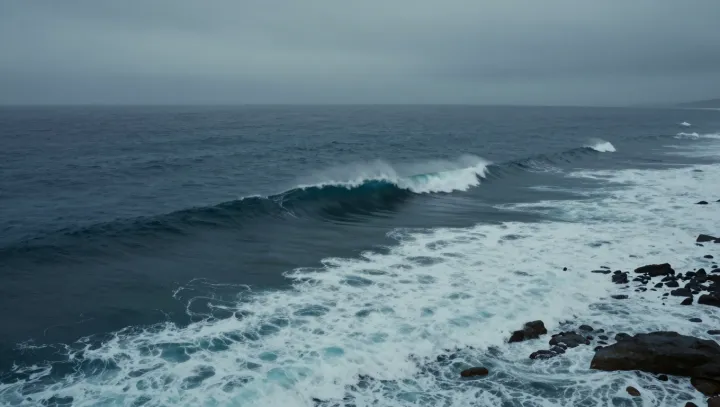
Nothing about a newborn fox kit suggests cartographer. Eyes sealed, limbs weak, body mass barely above a soda can, it begins life as cargo, not explorer, while the shoreline outside its den is a maze of boulders, crevices and slick ledges that would humble a clumsy adult.
Yet precision, not luck, explains how that kit later threads those rocks. Biologists point first to olfaction and the hippocampus, a pairing that turns every step into data. Each crack in the granite carries a distinct chemical profile; each drift of mist bends scent plumes in a repeatable pattern. As the kit graduates from den mouth to shoreline, head low, nose sampling, neurons in its hippocampal place cells and grid cells fire in tight patterns, linking specific smells with coordinates in space and with the vestibular system’s sense of tilt and acceleration.
The bold claim is that kits do not simply remember routes. They simulate them. After only a modest number of forays, repeated along similar arcs, synaptic plasticity strengthens those smell–space pairings into a cognitive map dense with landmarks: a patch of damp lichen, a sulfurous trickle, the musk trace of a rival. On a foggy night, when vision collapses to a few ghostly outlines, the fox can pivot on that internal model, plotting sidesteps around loose scree or sudden drop-offs, as if running a pathfinding algorithm on wet, living circuitry that once fit in the palm of a hand.