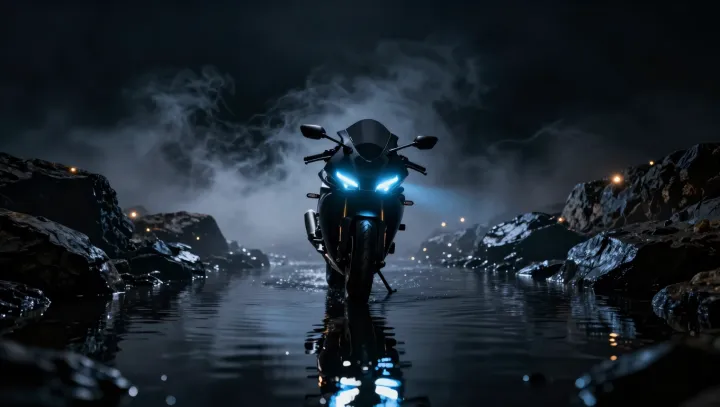
One bike in the rain sells harder than fifty under neon. That soaked superbike, idling on an empty street, isolates the product from noise and turns it into a visual monopoly; in that frame, the human brain runs a kind of attention auction, and every unused pixel around the machine bids up its perceived value.
Brand managers hate to admit it, but confusion is cheap and clarity is expensive, and the wet asphalt gives you ruthless clarity. With no competing silhouettes or retail fixtures, the superbike becomes a single reference point for status comparison, triggering social proof and scarcity bias much more aggressively than a grid of identical inventory that screams fungibility and discounting pressure.
The darker scene also weaponizes contrast adaptation and sensory gating, so that every reflection on carbon fiber, every exhaust note, punches above its physical intensity, while a showroom flattens those signals into background. That lone machine looks like a decision, not a product line, and decisions can command a premium that catalog items rarely achieve.