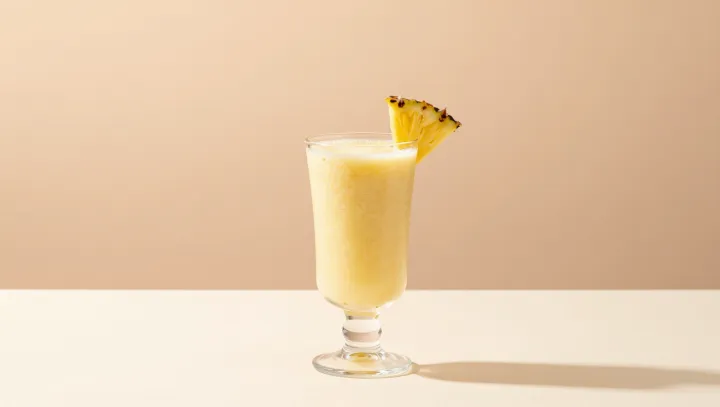
Luxury in a glass does not need cream. A pineapple smoothie can hit that milkshake memory by manipulating structure, not sugar. At the core is pectin, the gelling polysaccharide locked inside pineapple’s cell walls, which thickens the liquid phase once those walls are ruptured in a high-speed blender and given enough shear.
Texture, not flavor, sells the illusion first. When pineapple blends with ripe banana or soaked oats, soluble fiber increases viscosity through hydrocolloid behavior, slowing flow and trapping microbubbles so each sip feels dense yet soft. Add frozen fruit and a small dose of ice, and the mixture crosses from juice territory into something that moves like melted ice cream.
Fat then finishes the trick. A spoon of almond butter, coconut milk from the can’s thicker layer, or avocado supplies plant lipids that form an oil-in-water emulsion, with natural phospholipids and proteins acting as emulsifiers around tiny droplets. Those droplets scatter light and round off sharp edges on acidity, so the smoothie looks opaque, tastes fuller, and mimics the palate-coating effect people associate with dairy.
Temperature seals the story. Serve the blend just above freezing so fat stays semi-solid and viscosity peaks, and the brain reads cream even though the glass holds only fruit fiber, plant fats, and a bit of physics.