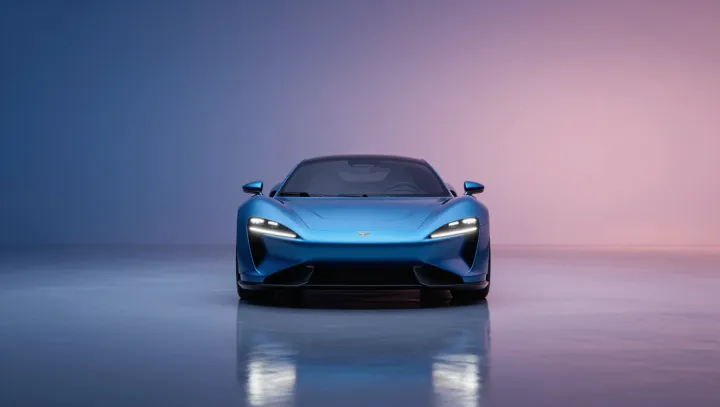
A nearly empty frame can feel richer than a full brochure. A single car, isolated in soft light, exploits a basic rule of perception: the fewer elements the eye must process, the more mental bandwidth remains to assign status, intent and price. Sparse composition, negative space and shallow depth of field act as filters, stripping away functional cues so that only hierarchy stays in focus.
Luxury, in this visual language, is not about horsepower but about who gets to ignore horsepower. When a brand withholds engine shots and performance charts, it is performing scarcity economics on the page, signaling that utility is assumed and thus uninteresting. Psychologists call this costly signaling: by refusing to justify itself with data, the product frames itself as a choice beyond rational comparison, closer to art than appliance.
Minimalist imagery also hacks cognitive bias more efficiently than any spec table. Clean surfaces and uninterrupted body lines exploit gestalt grouping, prompting the brain to read unity, purity, even inevitability. Technical figures trigger analytical processing in the prefrontal cortex; a silent, detail-light photo routes straight to affective evaluation, where associations with wealth, privacy and calm are stored. The result is simple. A blank wall, a quiet road, a single car, and the viewer fills in the missing performance with their own aspirational ceiling.