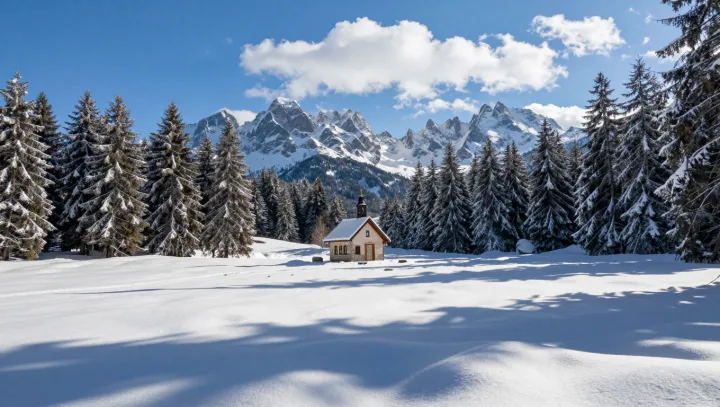
This chapel endures not because it is strong, but because it is allowed to fail in the right places. Hairline mortar joints act as controlled crack paths, so when water freezes and expands, the stress releases along soft lime rather than through the harder stone blocks anchoring the walls.
The real secret is water management, not mystique. Capillary action and gravity, familiar from hydrogeology textbooks, pull moisture out through porous mortar and open eaves, while hidden drainage layers under the floor reduce frost heave in the foundations, keeping the bearing strata uniform instead of letting pockets of ice jack the building upward.
Even temperature works in its favor, oddly. Because the chapel is unheated, thermal gradient is low, so differential thermal expansion between stone, mortar, and any embedded metal stays limited, cutting down shear stress at interfaces that would otherwise pry joints apart during each daily freeze–thaw swing.
Weathering is not ignored; it is managed. The outer stones behave as a sacrificial skin, slowly spalling under repeated ice wedging, while the structural core remains dry enough and thick enough that its compressive strength and modulus of elasticity stay within safe margins for another quiet season.