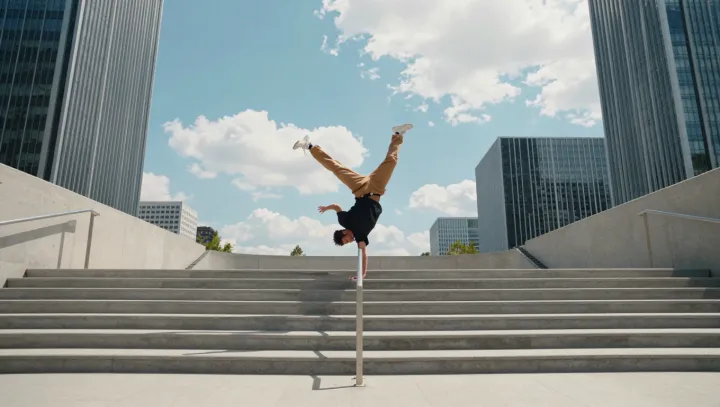
A motionless skier on a steep face is not a mistake but a training tool. That freeze, lasting only a few breaths, can tighten balance and sharpen control more than another rushed descent ever will.
At the core is the brain’s obsession with reference points. During a stop, sensory noise from speed and vibration drops, letting proprioceptors in ankles, knees, and hips recalibrate joint position with higher signal‑to‑noise precision. Sports scientists describe this reset in terms of improved proprioceptive feedback and refined motor cortex mapping, as stabilizer muscles fire without the masking blur of constant motion.
Equally subversive is what happens to muscle recruitment. In continuous skiing, large prime movers dominate, and smaller stabilizers hitch a ride. In a deliberate standstill, postural muscles around the spine and pelvis must carry the load alone, enhancing intermuscular coordination and reducing co‑contraction that wastes energy. Electromyography studies on balance tasks show cleaner, more economical firing patterns after such micro‑pauses, which translates into crisper edging and faster line choices on the next run.
So the skier who plants both poles and goes statue‑still is not hesitating. That athlete is running a quiet, high‑resolution systems check, gambling a few seconds now for a measurable gain in the next burst of speed.