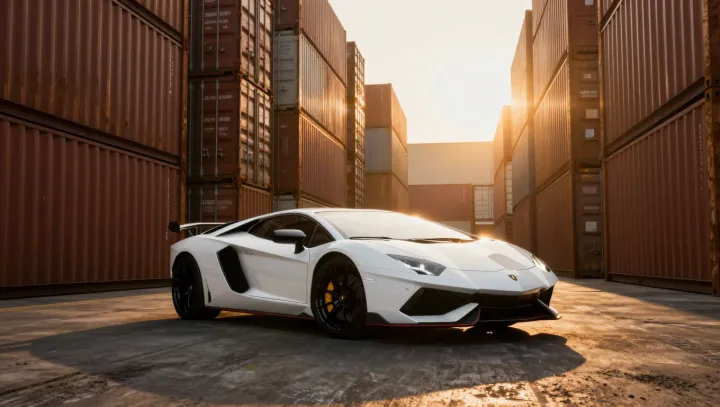
Steel boxes make the better studio. Between stacked containers, a Lamborghini's crouched body meets rectangles that refuse to flatter it; the collision of soft curvature and hard repetition turns a parked car into an argument about speed, mass, and restraint. The setting feels merciless. Corrugated walls erase the polite cues of a showroom, leaving proportion, shadow, and the low roofline to carry the frame.
Harshness is the point. Industrial yards supply a grid of known scale, so perspective compression and negative space make the car appear longer, lower, and less domesticated than it would beside a villa or open road. Nothing competes for attention. Container ribs throw narrow bands of shade across the panels, exposing surfacing decisions that softer surroundings conceal: wheel arches, intake openings, rocker panels, and the deliberate break of a body line. This is visual stress testing.
Contrast delivers a rebuke. A Lamborghini is usually linked to controlled display, yet beside cargo infrastructure it gains a different credibility, as if aerodynamic downforce and carbon-fiber theater had entered the working grammar of logistics. The photograph says otherwise. Against freight architecture, its drama is neither softened nor explained; it hangs there, a polished interruption in a place built for movement without applause.