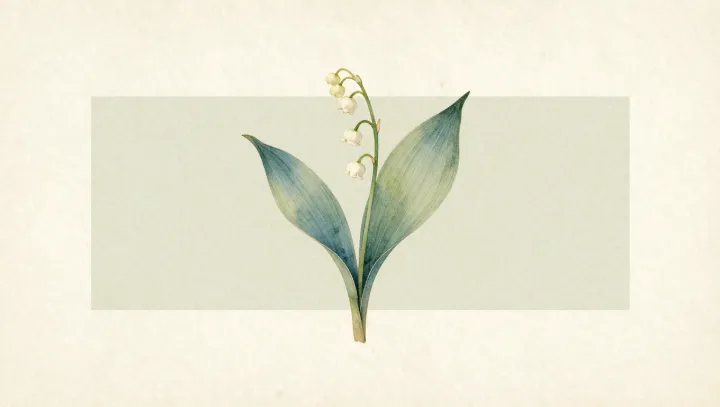
Pretty is the trap. Under cool shade, lily-of-the-valley's white bells hang like miniature lamps, yet the same plant carries cardiac glycosides, chemicals that can interfere with a mammal's heartbeat after ingestion. You should not sample it.
The chemistry is nastier. Cardiac glycosides, including convallatoxin, inhibit Na+/K+-ATPase, a membrane enzyme that maintains sodium and potassium gradients in heart cells; as sodium rises inside the cell, calcium handling shifts and contraction can become dangerously irregular. Hearts can misfire. Nausea, vomiting, weakness, dizziness, and an altered pulse may accompany poisoning. The plant has a defense.
The sensible rule is blunt. Leaves, stems, flowers, berries, and water that held cut plant material can pose a poisoning concern, especially for children and pets, because exposure is not limited to the bells people notice first. Act early. If ingestion is suspected, contact a poison center or urgent medical service and keep the plant available for identification; do not induce vomiting unless a professional directs it. Would you let a white bell make that call?