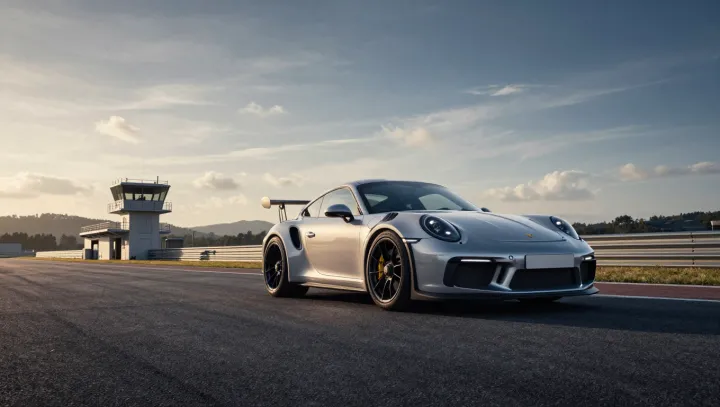
Sunset can be the quiet advantage. As asphalt sheds heat, a track-ready Porsche may find its tires moving nearer their workable temperature window, where rubber's viscoelastic response can raise usable friction rather than merely feel calmer at the wheel. That shift can appear in steering response and lap consistency. Power does not negotiate this. Temperature sets the terms.
The popular story is backwards. Grip is not a prize handed out by cold pavement; it emerges when tread temperature, vertical load, and surface microtexture allow the compound to deform across asperities without becoming greasy or glassy. The compound keeps score. Through hysteresis, energy dissipates within the rubber as it flexes, and the contact patch can generate more lateral force when its temperature sits inside the intended operating band.
That edge is conditional. If the surface cools past the tire's range, the same Porsche loses compliance, and friction can fall even as the air feels kinder; pressure growth, warm-up laps, camber, and compound selection decide whether dusk is an ally. Numbers settle the argument. A pyrometer and lap data expose what bravado conceals: the car is reading a thermal equation, while fading light makes speed seem almost ceremonial.