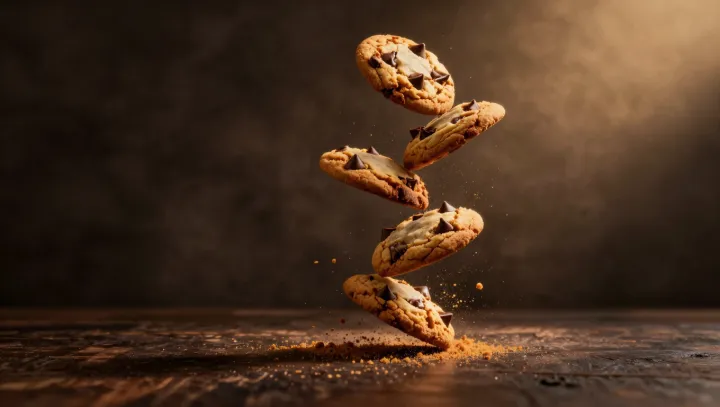
The crust cracks first. That small fracture announces the chemistry people mistake for simple nostalgia: sugars and amino acids have met heat, moisture has fled the surface, and a plain dough disk has become a cookie. Then comes the scent. The Maillard reaction releases hundreds of volatile compounds, giving browned edges their roasted, nutty pull. Your kitchen knows it.
The center matters more. While the outer layer dries and browns, the interior holds water long enough for starch gelatinization and protein coagulation to build a tender structure rather than a dry crumb. That contrast sells comfort. A firm shell gives way to softness because heat moves inward at a slower pace than it strips moisture from the exposed rim. You taste the gap.
Memory gets too much credit. Familiarity does matter, yet the feeling begins with a physical argument between crispness, chew, aroma, and warmth, each arriving on a slightly different schedule. You are sensing chemistry. Caramelization adds bitter-sweet depth, while browned milk solids and butterfat carry fragrance through the room before the first bite reaches your mouth. If you could choose only one, would you keep the crackling edge or the soft middle?