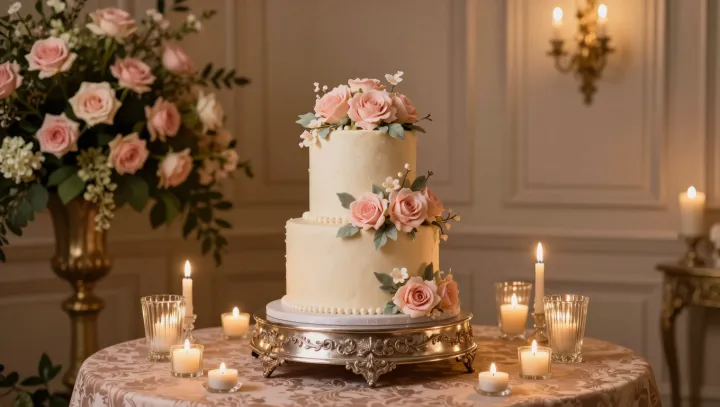
A tiered cake earns centerpiece status when a candle flame catches its sugar petals and draws the eye upward, while real floral arrangements remain low and loose across the table. That is the sharper composition. Height, rather than a crowded spray of blooms, creates the drama. Its scale can anchor a long table without claiming the whole visual field.
The trick is restraint. Sugar flowers, modeled in gum paste and wired only where their weight needs support, should echo the palette of the real flowers without copying their volume or shape. A narrow color range and deliberate spacing let petal edges register from across the room, while internal doweling keeps the tiers stable under the added load. This protects focal hierarchy: guests read the cake as an elevated sculptural object, then discover texture and fragrance at table level. No rivalry needed.
Candlelight carries the gamble. Tapers or low votives, set at a safe distance from icing and sugar work, turn shadows beneath each tier into depth; in daylight, that same elevation preserves clean sightlines over place settings. That placement also leaves servers a clear route and protects the practical work of cutting. The cake does not replace the flowers. It gives them a foil, then waits, luminous and still, for the room to notice.